People call Roblox “a game.” It is closer to a hall full of games: millions of worlds other players built in Roblox Studio, played with a shared avatar, and (when they cost anything) paid for in Robux. David Baszucki and Erik Cassel started the company in 2004; the public platform opened in 2006. The idea was simple: you make the game. This site is not Roblox. It is a free browser hub with no sign-up. If you came here looking for Roblox-related titles, start here.
Open Roblox games on this hub — it jumps straight to a Roblox search in our catalog.
What Roblox actually is
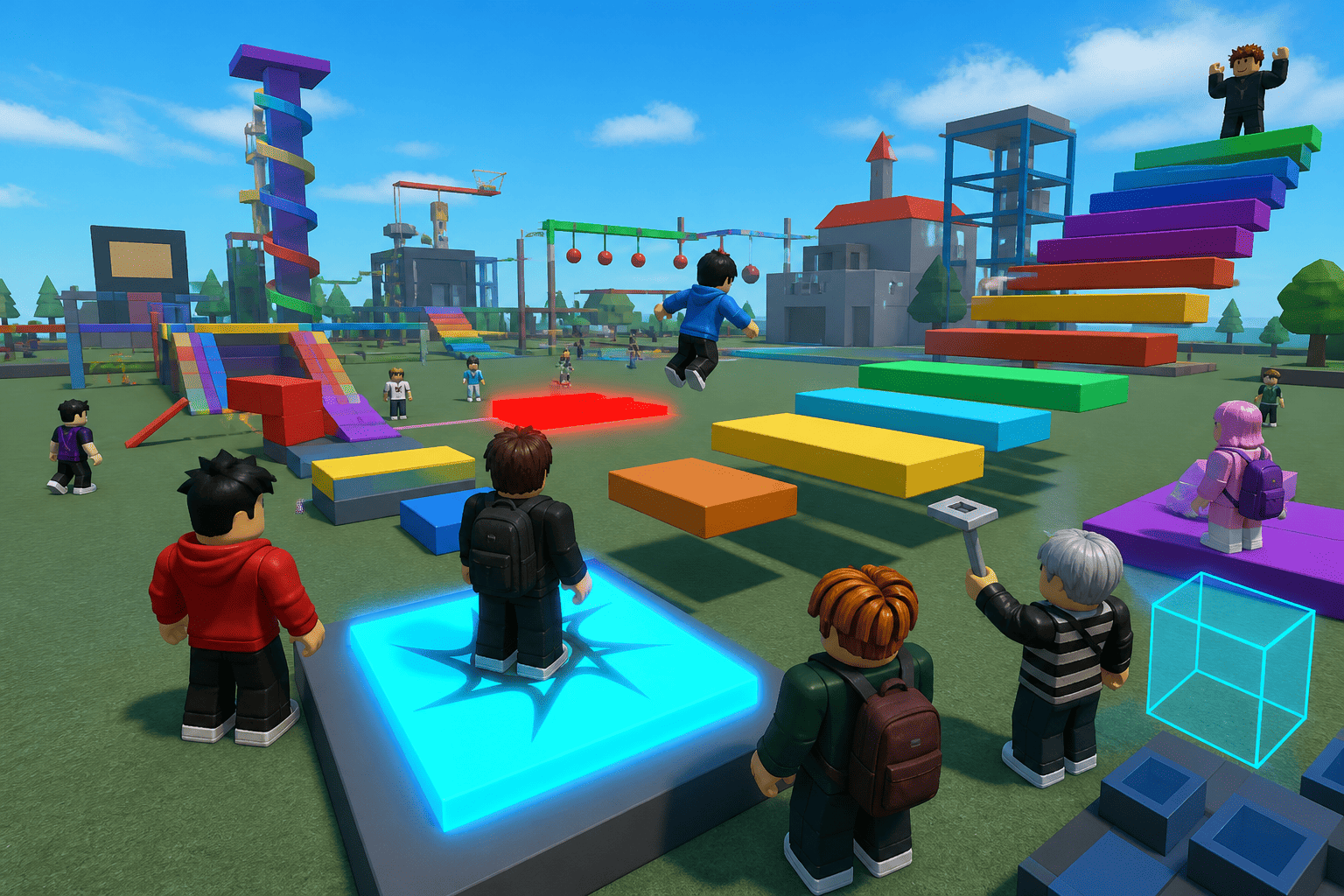
You open the Roblox app, pick a world, and drop into someone else’s map: an obstacle course, a roleplay town, a tycoon, a hangout. People build those worlds in Roblox Studio, mostly in Luau (a Lua dialect). Playing is free. Avatar clothes, passes, and extras use Robux. Creators can cash earned Robux out through Developer Exchange. What they sell is the whole package: tools, servers, discovery, identity, and payments around games made by players.
The size is the story. Roblox’s Q1 2026 shareholder letter put average daily active users at about 132 million, with tens of billions of hours in a single quarter. Hits such as Adopt Me! showed that a player-made title can hold attention like a studio game. The catalog is crowded on purpose: new worlds show up constantly, and popular ones keep getting updates.
How it changed gaming
Most games used to leave a studio finished. Roblox made the platform the product: tools, servers, an audience, and a store. A teenager could upload an obstacle course without a publisher. The industry noticed. Games made by players stopped being a side mode and became a business model. Hanging out also became the gameplay, especially in 2020, when Roblox doubled as a place to meet friends.
It also changed who gets paid. Payouts, rare items, and game passes taught a generation that a game can be a job, or at least extra money. That is a real shift. It is also why Roblox is argued about as much as it is played: when kids, money, and other people’s content share one app, the rules built into the product matter.
What it does well
- Anyone can make and share a playable world without a studio budget.
- Huge variety: if one world is dull, another is a click away.
- Social by default — play with friends in the same avatar space.
- Studio is a gentle start for scripting and 3D building. You can start without buying Robux.
The trade-offs
- Quality is uneven. Hits sit next to copies, scams, and “free Robux” bait.
- Small purchases and cosmetics are easy to overspend, especially for younger players.
- Moderation and safety have been a long-running criticism. Age checks and tighter chat rules in 2026 also made the app bumpier for some new users.
- A “quick session” can become an evening with no game-over. And this site is not the Roblox app — official play happens in Roblox’s own apps.
Play Roblox-related games on this hub
Do Not Disturb Me does not run the Roblox app. What it can do is put you on a catalog list matching “Roblox” — similar style, fan titles, or games that use the name — in your browser, with no account. Search Roblox on the game hub. For how this site works, see how to play.
Editorial note: independent overview. Not affiliated with Roblox Corporation. User figures from public company reports (including the Q1 2026 shareholder letter). Not legal, financial, or parenting advice — use official parental controls on Roblox itself.
Further reading: Platform history and criticism overview; Roblox Q1 2026 shareholder letter (SEC filing) for current size. Wikipedia · Roblox Q1 2026 letter.