Sudoku looks simple: a 9×9 grid, digits 1–9, and three overlapping constraints. That simplicity is why it fits a short break — and why it became a global newspaper staple. This article covers where the modern puzzle came from (with names and dates you can verify), what the board is actually asking you to solve, and a practical five-minute routine you can use on PlayBreak without turning the break into homework.
Browse Sudoku games on this hub — opens a catalog search for Sudoku-related titles beyond the main classic board.
What Sudoku is asking you to solve
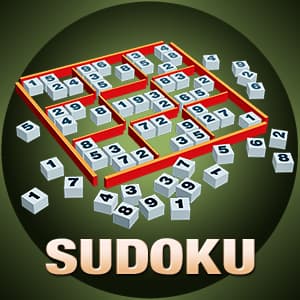
You fill every empty cell so that each digit from 1 to 9 appears exactly once in every row, every column, and every 3×3 block. Starting clues (“givens”) make some placements forced. A good short session is less about speed and more about finding those forced moves before you guess.

A short history of modern Sudoku
Number grids are older than the newspaper fad. In the late 19th century, French papers experimented with magic-square style puzzles (for example in Le Siècle and La France in the 1890s). Those ancestors shared the idea of a 9×9 field and local regions, but they were not yet the pure logic game most people play today. Mathematician Leonhard Euler’s earlier work on Latin squares (symbols once per row and column) is another intellectual root often cited in puzzle histories.
The modern form most historians credit was designed by Howard Garns (1905–1989), a retired architect from Indiana and freelance puzzle constructor. It first appeared in May 1979 in Dell Pencil Puzzles and Word Games under the name Number Place. Dell did not print Garns’s byline on the puzzle itself. Years later, New York Times crossword editor Will Shortz reconstructed the attribution: Garns’s name showed up in the magazine’s contributor list whenever Number Place ran, and was absent when it did not. Colleagues at his Indianapolis architecture firm also recalled him working on the number grid at a drafting board.
Garns lived to see the puzzle take off in Japan, but he died in 1989 — before the worldwide newspaper boom of the mid-2000s.
From Number Place to “Sudoku”
In April 1984, Maki Kaji, president of the Japanese puzzle company Nikoli, introduced the puzzle in Monthly Nikolist. The original Japanese title was roughly “the digits must be single” (Sūji wa dokushin ni kagiru); it was later shortened to Sudoku (数独). In Japan, “Sudoku” is a Nikoli trademark, so many Japanese publications still say Number Place / Nanpure instead.
Nikoli also shaped how many modern puzzles feel. Around 1986 they popularized house rules such as limiting the number of givens and preferring rotationally symmetric clue patterns — the “balanced” look many solvers now expect.
How Sudoku went global
In 1997, Hong Kong judge Wayne Gould saw a partly completed Japanese puzzle and later wrote software to generate unique grids quickly. Outside Japan, the mass-market wave is usually dated to 2004: Gould’s puzzles appeared in the Conway Daily Sun (New Hampshire) in September, then The Times (London) launched “Su Doku” on 12 November 2004, and the format spread across newspapers and websites within months.
After that, Sudoku became a default “quiet focus” puzzle — which is exactly why it still works as a browser break: clear rules, no multiplayer noise, and progress you can feel after a few careful placements.
Sources for this timeline include the English Wikipedia articles on Sudoku and Howard Garns (covering Shortz’s attribution, Nikoli’s naming, and Gould’s role in the 2004 spread). Treat encyclopedia pages as a starting point; the key names and dates above are the ones most secondary histories repeat.
Start with singles, not with guessing
Before you flood the grid with tiny candidate digits, scan for cells that can only hold one number:
- Naked single: a cell whose row, column, and block together leave only one possible digit.
- Hidden single: a digit that can fit in only one empty cell inside a given row, column, or block — even if that cell still looks “open.”
Most Easy boards, and many Medium openings, are chains of singles. Taking those first keeps a five-minute break productive and avoids random trial-and-error.
When pencil marks help (and when they slow you down)
Notes (pencil marks / memo mode) are useful after the obvious singles are gone. Mark candidates in one stubborn box or row, then eliminate. Filling every empty cell with tiny digits at the start of a short break turns the session into bookkeeping.
A practical rule: if you cannot name a forced move in about ten seconds, place notes in one crowded area — not the whole grid.
Difficulty for a real break
- Easy: best for a true reset — many forced moves and a quick sense of progress.
- Medium: good if you already spot singles and want one denser region to untangle.
- Hard: save for longer windows; five minutes may only clear the opening layer.
Matching difficulty to time is part of the skill. Leaving a Hard board unfinished is fine if the break restored attention.
A simple 5-minute routine
- Open Sudoku and choose Easy or Medium.
- Spend the first minute only on singles (scan rows, then columns, then blocks).
- If stuck, note candidates in one block and clear one more forced digit.
- When your mental timer says “enough,” stop — finished or not.
The win condition for a break is calmer focus, not a perfect clear every time.
Play it here
Ready for one calm round? Open Sudoku on PlayBreak, pick a level that fits your break, and use one rule from the history of good solving: no guess until you have checked for a single.
Want more variants after that? See all Sudoku games in the catalog.